
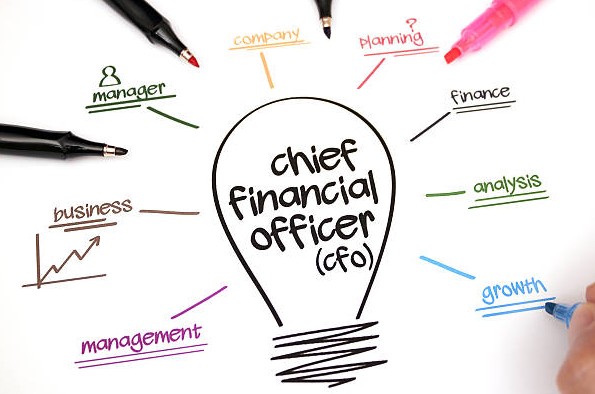
Working capital pressure and margin compression have put cash conversion back on the CEO/CFO agenda. The good news is that a large portion of “cash” is already inside most businesses—tied up in inventory, long lead times, rework loops, and order-to-cash friction. In other words: cash conversion is a process problem before it’s a finance problem.
When Lean is deployed as a disciplined operating system (not a set of isolated events), tools like SMED, Kanban, and Kaizen become powerful levers that improve Working Capital, Cash Flow, and EBITDA—often without major capital investment.
The CFO lens: Cash Conversion is operational
A simple way to frame the financial opportunity is the Cash Conversion Cycle:
CCC (days) = DIO + DSO − DPO
Each component is influenced by operational realities:
-
DIO (Inventory Days): batch sizes, changeover time, WIP queues, bottlenecks, and rework loops
-
DSO (Receivables Days): lead time reliability, right-first-time quality, documentation accuracy, and dispute reduction
-
DPO (Payables Days): supplier stability and schedule reliability (not just stretching terms)
If you improve flow, reduce WIP, and stabilize quality, the financials follow.
1) SMED: Changeover time → batch size → cash
SMED (Single-Minute Exchange of Die) reduces changeover time by separating work that can be done while the equipment is running (“external”) from work that must be done while stopped (“internal”), then simplifying and standardizing what remains.
Why it matters financially:
-
Faster changeovers enable smaller batches
-
Smaller batches reduce WIP and finished goods
-
Lower WIP/FG improves DIO and working capital
-
More available capacity reduces overtime, premium freight, expediting, and “hidden conversion cost”
SMED helps you “buy capacity without buying equipment” and reduces the cash trapped in inventory buffers.
2) Kanban: WIP limits → lead time → faster cash
Kanban creates a pull system that makes work visible and enforces WIP limits—preventing uncontrolled queues from building.
Why it matters financially:
-
WIP limits reduce inventory and shorten lead time
-
Shorter lead times can drive earlier invoicing and faster cash
-
Better delivery reliability reduces customer holds, deductions, and disputes
-
Less firefighting improves productivity and reduces conversion cost
Kanban works best when paired with clear replenishment rules, visual management, and simple escalation triggers when the system is out of balance.
3) Kaizen: Everyday improvement that compounds EBITDA
Kaizen is the discipline of continuous, structured improvement—small experiments that remove waste and reduce variation.
Where EBITDA gains show up most often:
-
Scrap, rework, and warranty reduction
-
Productivity improvements (labor and machine utilization)
-
Downtime and waiting reduction
-
Reduced expediting and premium freight
-
Higher throughput with the same assets
Kaizen compounds—but only if leaders govern it, standardize what works, and build capability so improvement becomes routine.
Sustainment: Pair KPIs with KBIs (behavior + outcome)
Most Lean programs fade after early wins because leaders track outcomes (KPIs) but don’t manage the behaviors and operating conditions that create them.
A sustainable approach pairs:
-
KPIs (results): inventory turns, lead time, OTIF, conversion cost, EBITDA contribution
with -
KBIs (behaviors/conditions): WIP adherence, changeover-to-standard, first-pass yield, schedule stability, problem closure rate, standard work audits, kaizen cadence
Then it installs a review rhythm:
-
Daily: tier meetings / huddles focused on abnormalities and actions
-
Weekly: constraint review, WIP/flow, problem-solving progress
-
Monthly: financial validation, scaling decisions, capability development
The goal is to make financial outcomes inevitable by managing the conditions that create them.
A practical 90-day approach: Prove it, then scale it
A simple way to start without “betting the factory”:
Weeks 1–2: Diagnose
-
Map the value stream and identify constraints
-
Baseline WIP, lead time, rework, schedule stability
-
Perform a changeover study where it matters most
-
Identify a Kanban loop or WIP-limiting opportunity
Weeks 3–8: Pilot
-
Run one SMED event + lock in standard work
-
Launch a Kanban or WIP cap in a controlled area
-
Establish daily management and escalation
-
Build a small Kaizen pipeline tied to measurable outcomes
Weeks 9–13: Scale
-
Expand to the next product family/value stream
-
Validate benefits with Finance
-
Train leaders to run the system (KBIs, coaching, sustainment)
-
Embed into the business cadence (S&OP, QBRs)
How GKW Business Solutions can assist
GKW helps leadership teams turn Lean tools into predictable financial outcomes—and sustain the gains through an operating cadence leaders can run.
1) Finance-first opportunity assessment (fast, fact-based)
We connect value stream performance to cash drivers (DIO/DSO/DPO), quantify where cash is trapped, and identify the highest-impact levers—so the work is targeted and measurable.
2) Pilot execution that produces validated results
We lead focused SMED, Kanban, and Kaizen pilots in one value stream/product family to prove impact quickly, then build the playbook to scale.
3) KPI + KBI governance so results stick
We help install practical scorecards and tiered meeting rhythms that manage both results (KPIs) and the behaviors/conditions (KBIs) that create them—turning improvement into a repeatable system.
4) Translation to CFO language and validation
We partner with Finance to ensure improvements show up as real outcomes—working capital release, conversion cost reduction, and sustainable EBITDA gains—avoiding “event math.”
Engagement philosophy: We offer no-charge discovery and charge when we’re actively creating value—improving EBITDA, cash flow, and working capital.
Call to action: 3 questions every CFO should ask
Before funding or expanding any Lean initiative, CFOs should ask:
-
Where will the cash show up—and by when?
What will move DIO/DSO, reduce conversion cost, or release capacity—and what’s the timeline? -
What weekly leading indicators (KBIs) will leadership manage to make results inevitable?
If the plan can’t define and govern KBIs, the initiative will likely fade after early wins. -
How will Finance validate savings and prevent “event math”?
What qualifies as real, repeatable savings—and how will it be tracked and sustained?