Many organizations invest in Lean training with the expectation that improved performance will follow. Employees attend workshops, learn terminology, practice using tools, and receive certifications.
Yet months later, leaders often find that very little has changed.
The problem is not that Lean tools are ineffective. The problem is that knowing how a tool works is not the same as building the organizational capability to apply it consistently.
Sustainable Lean transformation happens when leaders and employees learn together while improving real business processes. It is built through practical application, disciplined coaching, and daily leadership behaviors—not through classroom instruction alone.
Move Lean Learning to the Gemba
The most effective place to develop Lean capability is where the work actually happens.
At the Gemba, employees and leaders can observe the real process, listen to the people performing the work, identify barriers, collect meaningful data, and test improvements under actual operating conditions.
Classroom learning still has a role, but it should provide only the knowledge needed to support immediate application.
Instead of spending most of the program discussing Value Stream Mapping, A3 Problem Solving, Standard Work, 5S, or Visual Management, participants should quickly apply those methods to an important customer or operational challenge.
This approach changes the purpose of Lean training.
The goal is no longer to complete a curriculum. The goal is to improve the business while developing people who can continue improving it.
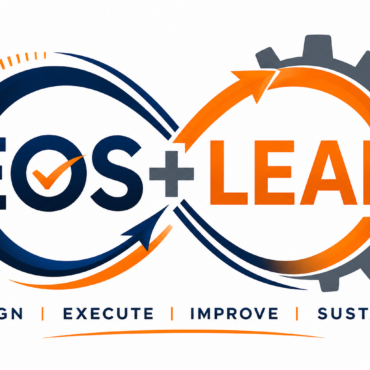
A Four-Phase Lean Transformation Framework
A practical Lean capability-building program can be organized into four connected phases:
1. Align
The first phase establishes purpose and prepares leaders to lead change.
Leaders must clearly communicate why improvement is necessary, how it connects to the organization’s strategy, and what outcomes the business is trying to achieve.
Activities may include:
- Leadership Gemba walks
- Voice of the Customer analysis
- Project selection
- SIPOC development
- Project charters
- KPI development
- Strategy deployment
- Employee listening sessions
During this phase, leaders begin demonstrating humility, respecting every individual, and creating constancy of purpose.
The desired outcome is alignment: leaders understand their responsibilities, employees understand the reason for the initiative, and the organization establishes clear priorities.
2. Understand
The second phase helps teams learn to see the process through the eyes of the customer.
Rather than relying on assumptions or reports, participants observe the work directly. They validate process maps, collect data, measure cycle times, identify handoffs, and evaluate how work moves across functions.
Common methods include:
- Value Stream Mapping
- Process Mapping
- Time Studies
- Gemba Walks
- Spaghetti Diagrams
- Baseline performance measurement
The leadership behavior required during this phase is observation without blame.
Leaders should ask questions, encourage learning, and help employees understand how their work connects to the larger system.
The result is a fact-based current-state assessment, stronger cross-functional collaboration, and a shared understanding of the most important improvement opportunities.
3. Improve
The third phase develops scientific problem solvers.
Teams identify root causes, test countermeasures, measure results, and adjust their approach based on what they learn. Leaders coach experimentation rather than providing every answer.
Improvement methods may include:
- A3 Problem Solving
- Five Whys
- Fishbone Diagrams
- Standard Work
- 5S
- Visual Management
- SMED
- Kanban
- Flow and Pull
- Error Proofing
This phase is important because Lean transformation cannot depend on a small group of experts solving every problem.
The organization must develop employees who can define problems clearly, analyze facts, test ideas, learn from failure, and verify whether an improvement actually worked.
When this capability grows, the business benefits from reduced waste, improved quality, better responsiveness, lower cost of poor quality, and more independent problem solving.
4. Sustain
Improvement is not complete when a new process is implemented.
The final phase reinforces the leadership and employee behaviors needed to maintain gains and continue improving.
Sustainment practices may include:
- Daily Management
- Leader Standard Work
- KPI boards
- PDCA cycles
- Control Plans
- Layered Process Audits
- Gemba coaching
- Executive report-outs
- Recognition of improvement efforts
The purpose of these systems is not to create more administration. Their purpose is to make expectations visible, identify abnormalities quickly, and provide a consistent rhythm for accountability and coaching.
Sustainment occurs when continuous improvement becomes part of the daily operating system rather than a separate initiative.
Lean Transformation Requires a Different Leadership Model
Traditional leadership often focuses on directing work, reviewing reports, and solving problems for employees.
Lean leadership requires a different set of behaviors.
Traditional leaders direct work. Lean leaders coach people.
Traditional leaders solve problems. Lean leaders develop problem solvers.
Traditional leaders review reports from a distance. Lean leaders go to the Gemba.
Traditional leaders measure activity. Lean leaders measure both behaviors and outcomes.
Traditional leaders hold people accountable for every problem. Lean leaders first determine whether the process, system, or standard allowed the problem to occur.
Traditional leaders react to issues. Lean leaders create systems that identify and prevent problems earlier.
This transition can be difficult because many successful leaders have built their careers by being decisive and providing answers.
However, a leader who provides every answer may unintentionally create dependency. A leader who asks thoughtful questions develops capability.
Measure the Behaviors That Produce the Results
Most organizations rely heavily on Key Performance Indicators.
KPIs such as productivity, quality, delivery, safety, cost, and revenue are necessary. They show whether the organization is achieving the desired business results.
However, KPIs do not always explain whether the right daily behaviors are becoming part of the culture.
That is why organizations should also establish Key Behavior Indicators.
Leadership KBIs may include:
- Conducting scheduled Gemba walks
- Coaching with open-ended questions
- Removing barriers identified by employees
- Recognizing improvement efforts
- Auditing processes rather than blaming people
- Reviewing visual management boards daily
Team-member KBIs may include:
- Participating in daily improvement discussions
- Identifying and documenting waste
- Using A3 thinking
- Following and improving Standard Work
- Escalating problems with facts
- Participating in improvement activities
KPIs measure the results.
KBIs measure the behaviors that create and sustain those results.
Organizations need both.
Lean Tools Are Vehicles for Culture Change
Lean tools should never become the final objective. Their real value comes from the thinking and behaviors they develop.
Value Stream Mapping encourages people to see the entire system rather than optimizing individual departments.
Gemba walks help leaders observe and coach rather than manage only through reports.
A3 Problem Solving develops scientific thinking.
Standard Work creates consistency, stability, and ownership.
Visual Management makes problems visible before they become larger disruptions.
5S builds workplace discipline and pride.
Kanban and flow improve responsiveness to customer demand.
Daily Management reinforces accountability and makes improvement part of everyday work.
Leader Standard Work creates consistency in how leaders support the culture.
When Lean tools are used correctly, they do more than improve processes. They change how people think, communicate, solve problems, and lead.
Build Capability While Improving the Business
Organizations do not need to choose between developing employees and producing measurable financial or operational results.
A well-designed Lean capability accelerator accomplishes both.
Participants learn by addressing actual business problems. Leaders strengthen their coaching skills. Employees become more confident problem solvers. Processes become more stable. Waste becomes visible. Performance improves.
Most importantly, the organization becomes less dependent on outside experts or a small internal Lean team.
The capability to improve begins spreading throughout the workforce.
How GKW Business Solutions Can Assist
GKW Business Solutions helps organizations move Lean from the classroom to the workplace by combining leadership coaching, practical application, and measurable business improvement.
Rather than delivering a generic training program, GKW works with leadership and frontline teams to identify real operational challenges and use those challenges as the foundation for developing internal capability.
Support can include:
- Conducting an operational or Lean-readiness assessment
- Aligning Lean priorities with business strategy, customer needs, EBITDA, and cash flow
- Helping leadership select high-impact improvement projects
- Facilitating Value Stream Mapping and current-state analysis
- Developing A3 problem-solving capability
- Establishing daily management and tiered accountability systems
- Creating KPI and Key Behavior Indicator scorecards
- Developing Leader Standard Work
- Coaching leaders during Gemba walks
- Facilitating Kaizen events and focused improvement workshops
- Implementing Standard Work, 5S, Visual Management, Kanban, SMED, and flow
- Integrating Lean operating practices with EOS or other business management systems
- Building internal Green Belt, Continuous Improvement, and frontline leadership capability
- Establishing sustainment plans, audits, and executive review routines
GKW’s role is not to become the organization’s permanent improvement department. The objective is to transfer knowledge, develop leaders, and create internal problem solvers who can sustain and expand the work.
The engagement begins by understanding the organization’s business priorities, current operating systems, leadership behaviors, and most significant performance gaps. GKW then helps build a practical roadmap that connects employee development with measurable operational and financial results.
Most of the work occurs where value is created—on the production floor, in service processes, and across the functions responsible for delivering value to the customer.
This practical approach allows organizations to develop capability while improving real performance.
Continuous Improvement as the Normal Way of Working
Culture is not created through slogans, posters, or occasional training events.
It is created through the behaviors leaders demonstrate and the systems employees experience every day.
When leaders consistently go to the Gemba, ask thoughtful questions, remove barriers, reinforce standards, and recognize improvement, employees begin to believe that continuous improvement is truly important.
When employees are given the opportunity to solve real problems and improve their own work, ownership increases.
Over time, Lean stops being viewed as a program.
It becomes the normal way the organization operates.
That is the ultimate objective of Lean transformation: a workforce that thinks differently, leaders who coach instead of direct, and an organization capable of improving itself every day.
Start With a Real Business Challenge
Organizations interested in developing stronger leaders, more capable problem solvers, and a sustainable continuous improvement culture should begin with an actual business challenge—not another classroom-only initiative.
GKW Business Solutions can help assess the current state, identify the right starting point, and develop a practical Lean capability-building plan tied to measurable business results.
To begin the conversation, contact:
Mike Craig
GKW Business Solutions
316-680-9695