
Lean has helped organizations across the world reduce waste, improve flow, and increase customer value. Yet many Lean transformations struggle to endure. Tools are deployed, metrics improve briefly, and then performance slowly drifts back to old habits.
This is where Sustainable Lean becomes essential. Sustainable Lean is not about running a few kaizen events or implementing visual boards—it is about creating a system of thinking and behavior that delivers results year after year. At the heart of this sustainability lies leadership behavior, organizational culture, and alignment with the Shingo Principles.
What Is Sustainable Lean?
Sustainable Lean is the ability of an organization to continuously improve without relying on constant external pressure. It embeds Lean thinking into daily work so that improvement becomes the normal way of operating rather than a special initiative.
Sustainable Lean focuses on:
-
Long-term capability over short-term gains
-
Developing people, not just processes
-
Culture and behavior as the foundation for results
Organizations that achieve Sustainable Lean do not “do Lean” — they think Lean.
Key Pillars of Sustainable Lean
1. Purpose-Driven Improvement
Sustainable Lean starts with a clear purpose that connects improvement work to customer value and organizational mission. When teams understand why improvement matters, engagement and ownership increase dramatically.
Key takeaway:
Improvement efforts must be aligned to customer needs and business strategy, not isolated cost-reduction goals.
2. Leadership Standard Work
Leaders play a decisive role in sustainability. When leadership behavior is inconsistent with Lean principles, improvement efforts stall.
Effective Lean leaders:
-
Go to the gemba regularly
-
Ask questions rather than give answers
-
Coach problem-solving instead of solving problems themselves
Key takeaway:
Lean sustainability rises or falls based on leadership behavior, not employee compliance.
3. Daily Management Systems
Sustainable Lean requires visibility and cadence. Daily management systems ensure that problems are identified early and addressed systematically.
Examples include:
-
Visual performance boards
-
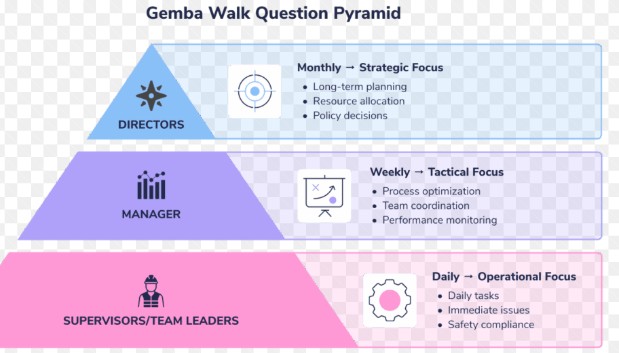
Tiered accountability meetings
-
Standardized problem-solving routines
Key takeaway:
Consistency beats intensity. Small daily improvements compound over time.
4. Respect for People
Lean cannot be sustained without trust. Employees must feel safe to surface problems, suggest improvements, and experiment with new ideas.
Respect for people means:
-
Developing problem-solving capability at all levels
-
Empowering teams to improve their own work
-
Treating mistakes as learning opportunities
Key takeaway:
People are not the problem to be fixed; they are the solution to be developed.
The Impact of Shingo Principles on Sustainable Lean
The Shingo Model provides a powerful framework for making Lean sustainable by focusing on the relationship between principles, systems, and results.
Principles Drive Behavior
Shingo emphasizes that principles inform ideal behavior, and behavior drives results. Tools alone cannot change behavior, but principles can.
Core Shingo principles include:
-
Respect Every Individual
-
Lead with Humility
-
Focus on Process
-
Assure Quality at the Source
-
Seek Perfection
Impact:
When organizations align behaviors to these principles, improvement becomes self-reinforcing rather than forced.
Systems Reinforce the Right Behaviors
Shingo teaches that systems must be intentionally designed to reinforce principle-driven behavior. Poorly designed systems will override even the best intentions.
Examples:
-
Performance metrics that reward teamwork over heroics
-
Problem-solving systems that prioritize root cause over blame
Impact:
Well-designed systems make it easier to do the right thing and harder to do the wrong thing.
Results Are a Lagging Indicator
A key Shingo insight is that results should be used to confirm behavior, not to drive it. Chasing numbers without reinforcing principles leads to short-term wins and long-term erosion.
Impact:
Organizations shift from “managing by metrics” to “managing by behavior,” which is essential for sustainability.
Why Sustainable Lean Matters More Than Ever
In today’s environment—characterized by rapid change, workforce challenges, and increasing customer expectations—organizations need more than efficiency. They need adaptability.
Sustainable Lean enables organizations to:
-
Respond faster to change
-
Retain and engage talent
-
Build resilience into operations
-
Achieve consistent, long-term performance
Lean done right becomes a strategic advantage, not a cost-cutting exercise.
Final Thoughts
Sustainable Lean is not a destination—it is a way of thinking and leading. By grounding Lean efforts in strong leadership behaviors, daily management, respect for people, and the Shingo Principles, organizations can move beyond temporary improvements and build a culture of continuous excellence.
When principles guide behavior, and behavior drives systems, sustainable results naturally follow.